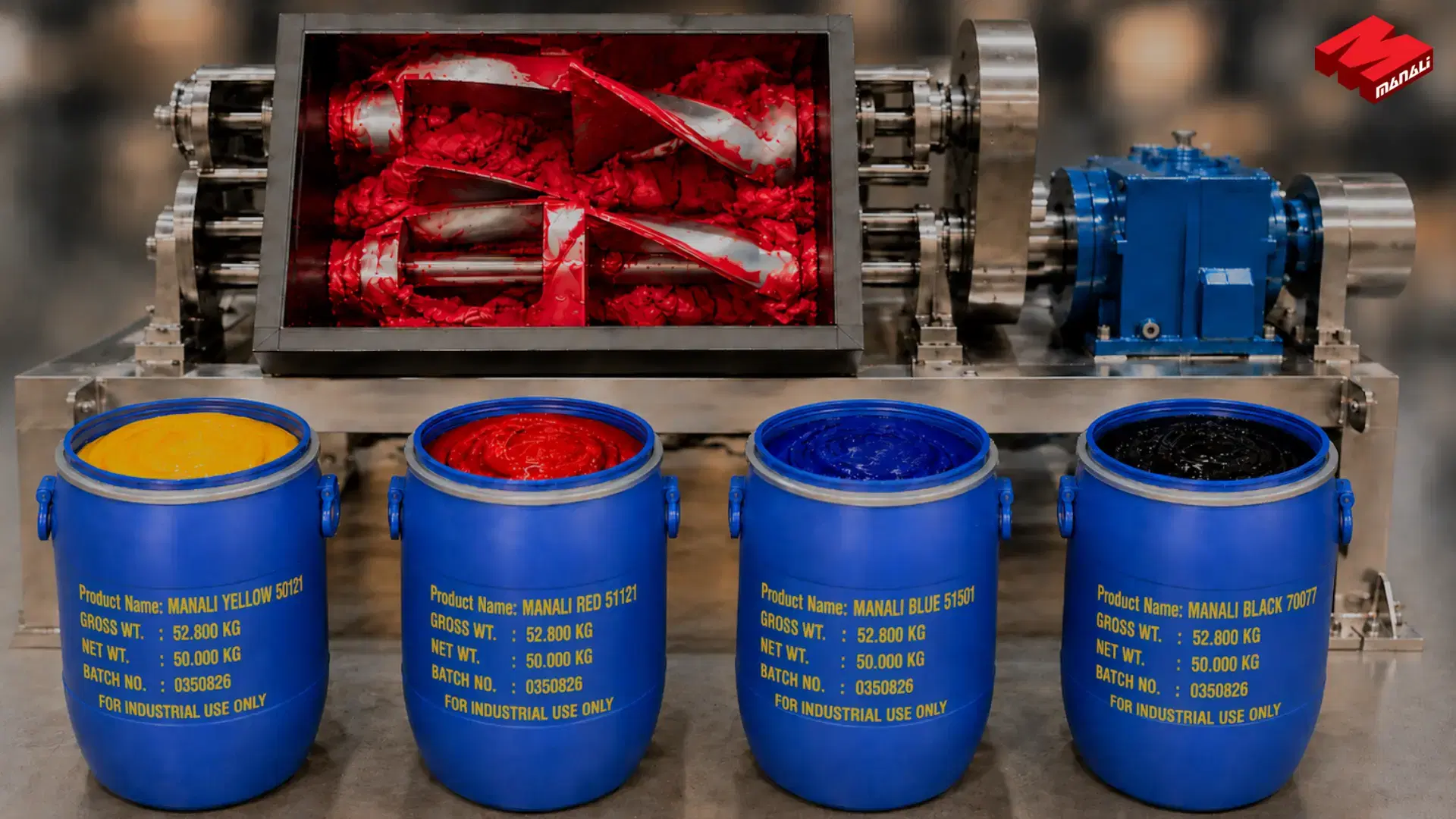
100% In-House Manufactured
High-Performance Pigment Dispersions & Universal Pastes
We manufacture universal, water-based and solvent-based pigment dispersions in-house—from pigment synthesis to final paste.
What Are Pigment Dispersions?
Pigment dispersions, also called pigment pastes or colorant dispersions, are concentrated liquid colorants in which pigment particles are milled and stabilized in a carrier. Water-based and solvent-based dispersions use carriers selected for their intended formulations. A universal pigment paste is designed for use in both water-based and solvent-based coating systems; the grade-specific vehicle and compatibility are documented in its TDS.
A ready-to-use dispersion can reduce production-floor grinding and dry-powder handling while supporting rapid colour development and consistent processing. Tinting strength, stability and final application performance depend on the selected grade, dosage, binder and manufacturing conditions.
The Manali Manufacturing Advantage
Unlike toll-millers that purchase dry pigment powder from third-party suppliers, Manali Pigments manufactures the base organic and inorganic pigments and mills the dispersions entirely in-house. From Molecule to Micron control covers pigment crystal morphology, surface chemistry, sub-micron milling, shade accuracy and stability.
Control over synthesis before milling reduces batch-to-batch shade variation, while proprietary sub-micron bead milling supports optimally dispersed, stabilized pastes. The ISO 9001:2015 quality-management system governs production (see our Quality & Compliance framework), and STAR EXPORT HOUSE recognition supports international supply.
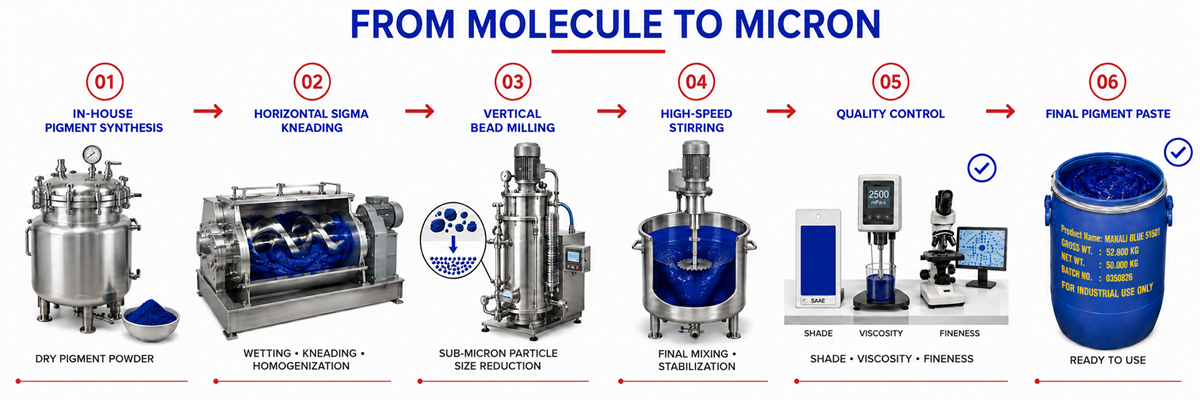
From Molecule to Micron: base-pigment manufacture and dispersion milling are controlled in-house.
- In-house pigment synthesis and dry-pigment preparation.
- Homogenization and initial milling.
- Wetting and pre-mixing in the selected carrier.
- Sub-micron bead milling to develop the dispersion.
- Quality-control checks for the specified grade.
- Final stabilized pigment paste and packaging.


Advanced Dispersion Systems
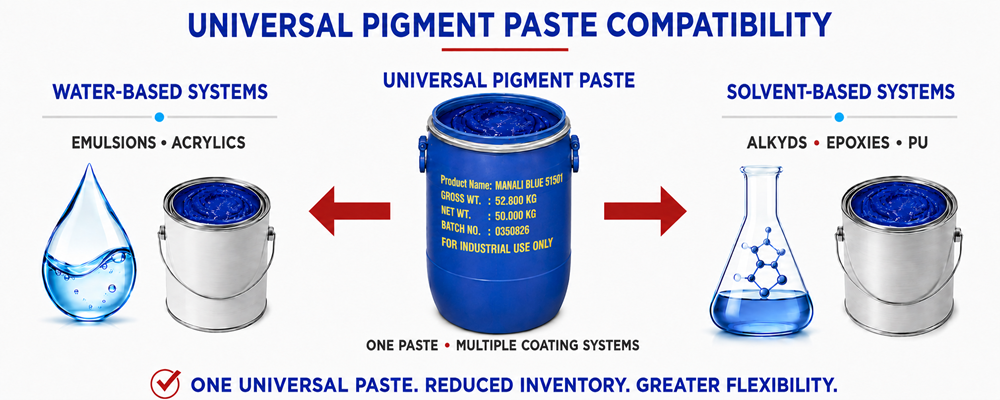
One universal paste can serve compatible water-based and solvent-based coating formulations.
Confirm the selected grade’s vehicle, binder compatibility and addition level through its TDS and a formulation trial. VOC-free, APEO-free and binder-free descriptors apply to documented products and do not establish blanket regulatory or eco-label compliance for every formulation.
Universal Pigment Paste — Dual-System Compatible
This binder-free, VOC-free and APEO-free universal pigment paste is compatible with aqueous and non-aqueous coating systems. A single paste can be incorporated into acrylic emulsions, alkyds, epoxies and polyurethanes, reducing the need to stock separate water-based and solvent-based colorants.
Water-Based Pigment Dispersions
VOC-free aqueous dispersions provide high pigment loading and stability against settling and flocculation. They support colour development and tinting strength in decorative emulsion paints, water-based printing inks and textile printing.
Solvent-Based Pigment Dispersions
Solvent based pigment dispersions are formulated for solvent-borne epoxies, polyurethanes, alkyds and chlorinated rubber systems. They support gloss retention, flocculation resistance and weatherability in automotive refinish, protective and industrial maintenance coatings.
Featured Product: Pigment Black 7 Universal Dispersion
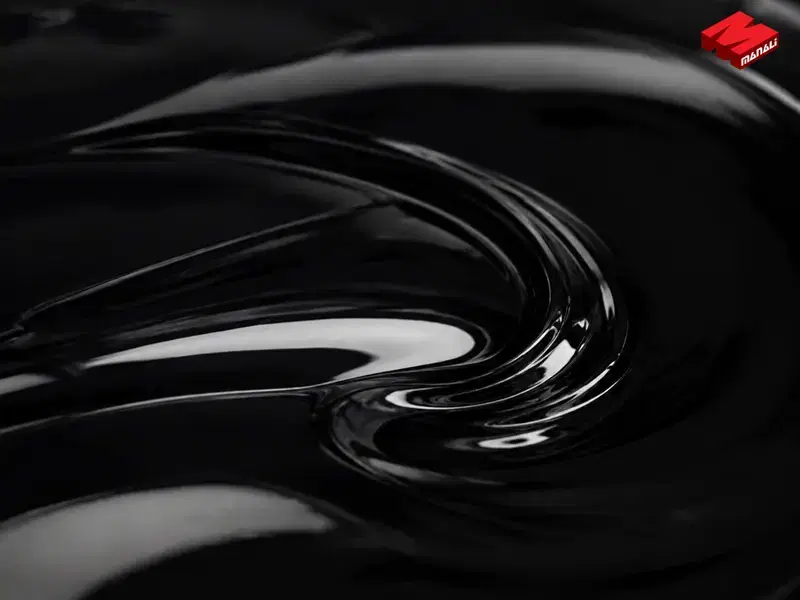
Manali Pigments manufactures Pigment Black 7 universal dispersion as a concentrated black pigment paste for compatible water-based and solvent-based coating systems. Our in-house pigment manufacture and milling provide control from base pigment to finished dispersion.
Review the selected grade’s TDS for pigment loading, viscosity, dispersion fineness, storage conditions and binder compatibility. Evaluate jetness, undertone, tinting strength and stability in the intended acrylic, alkyd, epoxy or polyurethane formulation before production approval.
Product Range & Applications
The complete 24-row product-grade table below includes full-shade and reduction swatches, Colour Index numbers, light and weather ratings and coating-system compatibility. Pigment Black 7 remains highlighted as the universal-dispersion focus.
Swipe horizontally to view all application columns.
| Fastness | Applications | ||||||
|---|---|---|---|---|---|---|---|
| Full Shade | Reduction | Colour Index No. | Light (1-8) | Weather (1-5) | Coating (WB/SB) | Plastic, Rubber & Powder | Textiles |
| Pigment Yellow 1 | 4 | 2 | |||||
| Pigment Yellow 3 | 4 | 2 | |||||
| Pigment Yellow 12 | 5 | 3 | |||||
| Pigment Yellow 65 | 5 | 3 | |||||
| Pigment Yellow 74 | 5 | 3 | |||||
| Pigment Yellow 83 | 6 | 3 | |||||
| Pigment Red 2 | 4 | 2 | |||||
| Pigment Red 3 | 4 | 2 | |||||
| Pigment Red 4 | 4 | 2 | |||||
| Pigment Red 8 | 4 | 2 | |||||
| Pigment Red 12 | 5 | 3 | |||||
| Pigment Red 23 | 5 | 3 | |||||
| Pigment Red 31 | 4 | 2 | |||||
| Pigment Red 32 | 5 | 3 | |||||
| Pigment Red 112 | 6 | 3 | |||||
| Pigment Red 170 | 7 | 4 | |||||
| Pigment Orange 5 | 5 | 3 | |||||
| Pigment Orange 13 | 5 | 3 | |||||
| Pigment Orange 34 | 6 | 3 | |||||
| Pigment Blue 15:0 | 8 | 5 | |||||
| Pigment Blue 15:3 | 8 | 5 | |||||
| Pigment Green 7 | 8 | 5 | |||||
| Pigment Violet 23 | 7 | 4 | |||||
| Pigment Black 7 | 8 | 5 | |||||
Displayed shades are indicative screen representations. Light and weather ratings and application ticks describe the listed grades; they do not replace the selected dispersion’s TDS or testing in the final binder and process.
Industry Applications
Pigment dispersions and universal pastes support five core industrial sectors. In architectural paints, universal and water-based dispersions provide colour for decorative emulsions and tinting systems. In industrial and automotive coatings, solvent-based and universal pastes support chemical resistance and gloss retention. In printing inks, high-concentration dispersions support rapid colour development. Textile printing uses dispersions where wash fastness and brightness are important, while wood coatings use them where transparency and UV protection are required.
For ink-system selection and formulation guidance, explore our resource on pigments for printing inks.
For architectural, industrial and automotive formulations, review pigments for paints and coatings.
Global Demand & Pigment Paste Market Trends
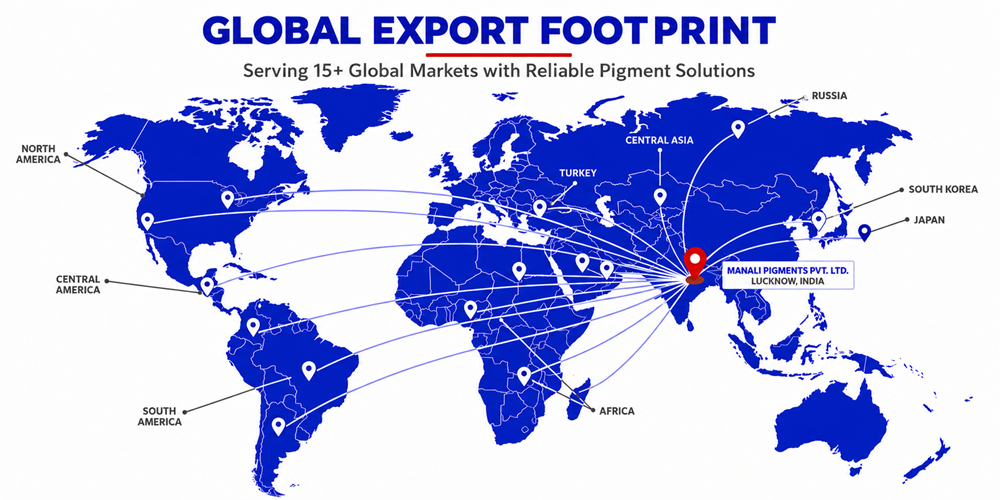
Demand for pigment dispersions is supported by the transition toward VOC-free, eco-friendly water-based systems and by the growing use of universal pigment pastes to streamline raw-material inventories. Paint manufacturers are consolidating colorant supply chains by using one universal system where formulation compatibility permits. Manali Pigments exports pigment dispersions and universal pastes to more than 15 countries, including the USA, Brazil, Russia, Mexico, Turkey and the UAE.
Complete Your Colour Palette
Organic Azo Pigments
Yellow, orange and red pigment categories for industrial colour formulations.
Explore Organic Azo Pigments →Phthalocyanine Blue & Green
Blue and green pigment categories for coatings and printing-ink formulations.
Explore Phthalocyanine Blue & Green →Carbon Black
Pigment Black 7 dry-pigment grades for black colour and formulation development.
Explore Carbon Black →Frequently Asked Questions
A universal pigment paste is a concentrated pigment dispersion designed for use in both water-based and solvent-based coating systems. Manali manufactures the base pigment and mills the paste in-house. The selected grade’s carrier, binder compatibility and addition level should be confirmed through its TDS and a formulation trial; universal does not mean compatibility with every formulation.
A pre-dispersed pigment paste can reduce production-floor grinding, simplify dry-powder handling and support faster colour development. It also helps formulators work with a controlled liquid colorant rather than preparing every dispersion themselves. Actual tinting strength, processing time, stability and waste depend on the grade, dosage, equipment and finished formulation.
The featured Pigment Black 7 universal dispersion is designed for compatible water-based paints, including acrylic and latex systems, and selected solvent-borne coatings. Before production approval, review the grade-specific TDS and evaluate its carrier compatibility, jetness, undertone, tinting strength and storage stability in the intended binder and application.
Manali’s water-based range includes VOC-free options. Request the selected grade’s TDS and SDS to confirm its VOC declaration, APEO status and supporting test information. Regulatory definitions and application requirements vary by market, so a water-based carrier or page-level description should not be treated as proof that every grade meets every emissions or eco-label requirement.
Manali manufactures the base organic and inorganic pigments and mills the dispersions in-house. This From Molecule to Micron approach retains manufacturing control from pigment synthesis through paste production, supporting traceability, shade control and consistent processing. Buyers can evaluate the relevant technical data, quality documentation and application trials alongside the company’s manufacturing capabilities.
Pigment pastes and dispersions serve architectural paints, industrial and automotive coatings, printing inks, textile printing and wood coatings. Other applications are evaluated grade by grade. The correct paste depends on the carrier, binder, additives, substrate and manufacturing process; an industry listing does not replace the technical assessment of the selected dispersion.
Request the selected grade’s TDS and SDS, together with relevant lot documentation and application information. Procurement teams and distributors should also confirm packaging, minimum order quantity, lead time, destination-market requirements and export paperwork with Manali. Specify the dispersion system and Colour Index requirement so the technical team can identify the appropriate product information.
Verify pigment identity, carrier, binder compatibility, loading, viscosity and storage instructions in the grade-specific documentation. Then run a controlled trial at the intended addition level to evaluate colour development, flocculation, jetness or transparency, gloss and final application performance. Pigment lightfastness and weather ratings alone do not establish dispersion stability or finished-formulation suitability.
Knowledge Hub
Explore Our Pigment Knowledge Hubs
Access evergreen technical guides and the latest blogs organized under our eight specialist pillar pages.

Knowledge Hub
Manufacturing Excellence
In-house manufacturing process, quality control, and infrastructure standards.
Latest: Pigment Manufacturing Process: Which Quality Records Should Buyers Request at Each Stage ·
Explore the pillar →
Knowledge Hub
Organic Azo Pigments
Chemistry, grades, application guidance, and formulation resources for Organic Azo pigments.
Latest: Pigment Yellow 13 for Printing Inks: How to Define the Trial and Acceptance Criteria ·
Explore the pillar →
Knowledge Hub
Pigments for Printing Inks
Pigment selection for offset, flexographic, and gravure ink systems.
Latest: Pigment Dispersions in Flexographic Inks: How to Diagnose Settling, Flocculation and Colour Loss ·
Explore the pillar →
Knowledge Hub
Pigments for Paints & Coatings
UV stability, weatherability, and dispersion guidance for architectural and industrial coatings.
Latest: Water- vs Solvent-Based Pigment Dispersions: A Binder-Compatibility Checklist for Coatings ·
Explore the pillar →
Knowledge Hub
CI Numbers & Technical Reference
Colour Index reference, technical specifications, and pigment identification.
Latest: Pigment Blue 29 vs Pigment Blue 15:3 in Coatings: Which Questions Should a Formulator Ask? ·
Explore the pillar →
Knowledge Hub
Pigments for Construction
Alkali-resistant, UV-stable pigments for cement, concrete, and construction materials.
Latest: Concrete Coloring Pigment: How Cement Colour, Aggregate and Curing Affect Final Shade ·
Explore the pillar →
Knowledge Hub
Pigments for Plastics & Masterbatch
Heat-stable pigments engineered for masterbatch, injection molding, and extrusion.
Latest: Pigment Masterbatches: How to Check Polymer Compatibility Before Scale-Up ·
Explore the pillar →
Knowledge Hub
Pigment Exporter India
STAR EXPORT HOUSE certified, 100% in-house manufacturing for global distribution.
Latest: Pigment Supplier Import Documentation Checklist: What Buyers Should Confirm Before Shipment ·
Explore the pillar →Request Technical Details or Bulk Orders
Request Technical Data Sheets for Universal, Water-Based or Solvent-Based dispersions, discuss bulk pricing or consult the technical team about custom colour matching and binder compatibility for your coating formulation.